What I return to,
again and again
The teachers, books, providers, and practices I return to most often in this work — gathered here to support your journey between sessions and beyond.
New here? Start with one thing.
This page holds years of curated resources. Don't try to consume it all at once. These are the three entry points I most often suggest to people beginning this kind of work.
Use these resources gently.
Some material can bring up strong emotions, especially around trauma and the body. Choose one resource at a time, pause when you need to, and bring anything important into session.
If you want to understand trauma and the body
Begin with Bessel van der Kolk's talk on how trauma is held somatically — then pick up his book. It will reframe how you understand your own nervous system, your history, and your capacity to heal.
Watch → YouTubeIf you want to understand your nervous system
Irene Lyon's free video series on nervous system regulation is some of the most practical and accessible material available. Her work is a genuine gift — no cost, no commitment.
Watch → YouTubeIf you want to begin a daily practice
Start with 20 minutes of Yoga Nidra, three times a week. Most people notice something shifting within the first two weeks. It asks very little, and offers a great deal.
Listen → PlaylistsTalks I often recommend to clients
Leading researchers, clinicians, and teachers in trauma, somatics, neuroscience, and integrative healing — the voices that have most shaped this practice.
Trauma and the Body — How We Hold What Hurt Us
A foundational lecture on how traumatic experience is held somatically and what that means for lasting recovery.
Watch on YouTube →The Fundamentals of Somatic Experiencing
Releasing trauma through the body — gently, without requiring re-telling the story.
Watch on YouTube →21 Days of Nervous System Education
One of the most accessible free resources on nervous system regulation. Practical, grounded, and genuinely useful.
Watch on YouTube →The Polyvagal Theory — Safety, Connection & Healing
The science behind why felt safety is the foundation of all healing and how the vagus nerve shapes our capacity for rest.
Watch on YouTube →When the Body Says No — The Stress–Disease Connection
How suppressed emotion and chronic stress manifest as illness — and what a more honest relationship with ourselves makes possible.
Watch on YouTube →iRest Yoga Nidra — A Complete Guided Practice
A full session with one of the world's most respected Yoga Nidra teachers. An ideal entry point into one of the most restorative practices available.
Watch on YouTube →Practitioners I trust
A small, carefully considered list of providers in and around Southport — colleagues whose work I know, respect, and refer to when a client's needs extend beyond my own scope.

A thoughtful, integrative psychiatrist with a particular sensitivity to trauma. Sarah approaches medication from a minimal-intervention perspective and works well alongside ongoing talk therapy and somatic work.

A somatic bodyworker trained in myofascial release and craniosacral therapy. Marcus works with held tension in the body in ways that complement EMDR and somatic psychotherapy exceptionally well.

Lisa's work with the meridian system is precise, gentle, and deeply attuned to emotional as well as physical presentation. A wonderful complement for clients working with anxiety and nervous system dysregulation.

A registered dietitian specialising in the gut–brain connection. Rachel helps clients understand how food, the microbiome, and inflammation intersect with mood, cognition, and resilience.

Priya teaches Kundalini yoga with an emphasis on the nervous system and emotional processing. Her classes are grounding, accessible, and often a meaningful complement to our work in session.
What I recommend
Not prescriptions — thoughtful additions that many clients find supportive alongside therapy and lifestyle work. Always consult your physician before adding anything new.
Magnesium Glycinate
Calming to the nervous system, supportive of sleep quality, and gentle enough for most people. One of the most broadly useful supplements in mental health support.
Shop on Amazon → Stress & CortisolAshwagandha (KSM-66)
A well-researched adaptogen with meaningful evidence for reducing cortisol and supporting the body's stress response. The KSM-66 extract is the most clinically studied form.
Shop on Amazon → Cognitive FunctionLion's Mane Mushroom
Supports neurogenesis and BDNF production — relevant for recovery from chronic stress, depression, or cognitive fog. Subtle in effect and consistently interesting in the research.
Shop on Amazon → Brain & InflammationOmega-3 (EPA/DHA)
Anti-inflammatory support for the brain and nervous system. Foundational for most people — particularly those navigating mood dysregulation, burnout, or chronic stress.
Shop on Amazon → Calm FocusL-Theanine
Promotes relaxed alertness without sedation. Often paired with caffeine for focus — or used alone to soften anxiety without disrupting cognitive clarity or function.
Shop on Amazon → Mood & ImmunityVitamin D3 + K2
Deficiency in Vitamin D is remarkably common and meaningfully linked to mood dysregulation and immune vulnerability. K2 supports proper D3 utilisation.
Shop on Amazon →Things worth having
Books that belong on every healing shelf, and a few physical tools that support a grounded, embodied practice at home.
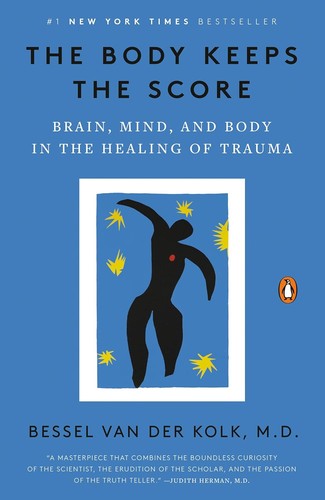
The Body Keeps the Score
The most important book written on trauma in the last three decades. Required reading for understanding what trauma is, how it lives in the body, and what genuinely supports recovery.
View on Amazon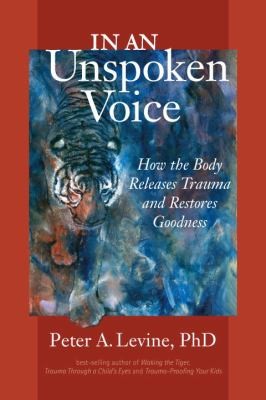
In an Unspoken Voice
Peter Levine's definitive text on Somatic Experiencing — how the body heals trauma, and why working with the nervous system is essential to lasting recovery.
View on AmazonWhen the Body Says No
A compassionate exploration of how unexpressed emotion and unmet needs manifest as illness — and what a more honest relationship with ourselves makes possible.
View on Amazon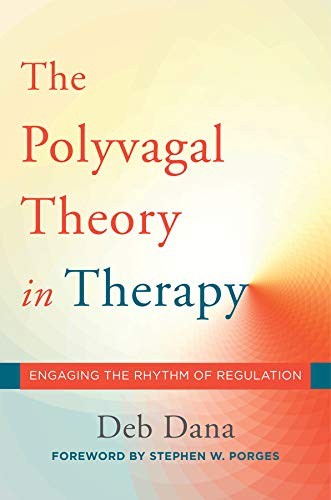
The Polyvagal Theory in Therapy
An accessible, clinically-grounded guide to applying Polyvagal Theory — particularly valuable for understanding the neuroscience of safety and co-regulation.
View on AmazonZafu Meditation Cushion
A quality cushion makes a genuine difference to sitting practice. The right height takes strain off the hips and lower back, allowing the mind to settle more quickly.
View on AmazonJade Harmony Yoga Mat
The mat I recommend without reservation. Natural rubber, excellent grip, substantial enough to feel grounded — and made with environmental responsibility.
View on AmazonSome links are Amazon affiliate links. If you purchase through them, Janet earns a small commission at no extra cost to you. She only recommends things she genuinely uses or believes in.
Music for the work
Carefully composed playlists for different moments in the healing journey — from morning grounding to deep practice to evening restoration.
Morning Grounding
Gentle, unhurried sounds for waking with intention — before the day takes hold. For journalling, stretching, or sitting with your morning tea.
Listen on Spotify →Deep Practice
Music selected for meditation, Yoga Nidra, and body-based practices. Minimal and atmospheric — designed to support the work rather than direct it.
Listen on Spotify →Restoration
Evening soundscapes for easing the nervous system from the day's activity. For winding down, integration, and the slow movement from doing into being.
Listen on Spotify →"Healing is not a destination you arrive at. It is the quality of attention you learn to bring — to yourself, again and again."— Janet Aspen, Ph.D